The best time to take a Niagara Falls helicopter tour is a clear morning in early autumn — roughly late September through mid-October — when the light is crisp, the crowds have thinned, and the gorge below is lit up in red and gold. That said, the flight runs year-round and there is no wrong season to fly: summer gives you the fullest water flow and the longest days, winter turns the falls into something starkly beautiful, and spring brings the river back to full power. The real trick is picking the right time of day and keeping an eye on the weather.
Below is a straight, month-by-month and hour-by-hour guide to choosing your flight. It is built on how the 12-minute scenic tour over Horseshoe, American and Bridal Veil Falls actually looks and feels across the year — so you can book the flight that matches what you came for.
What actually makes a flight "the best"?
Before the calendar, it helps to know what you are optimising for. Four things shape how good your flight looks and how smoothly your day goes:
- Visibility. A clear sky is worth more than any season. Haze, low cloud and heavy rain are the only things that genuinely dull the view.
- Light. The angle of the sun decides how much depth, colour and texture you see in the gorge and the mist.
- Crowds and wait times. Fewer people on the ground means a shorter check-in and more flexibility to rebook if the weather shifts.
- Water flow. The Niagara River is at its fullest in late spring and summer, which means bigger plumes of mist and more thunder over Horseshoe Falls.
No single day maxes out all four. Once you know which one matters most to you, the season picks itself. If you want the full rundown of everything you pass on the route, our guide to what you'll see from the helicopter maps every landmark from the heliport to the brink of the falls.
The best time of year, season by season
Summer (June–August): long days, biggest water, book early
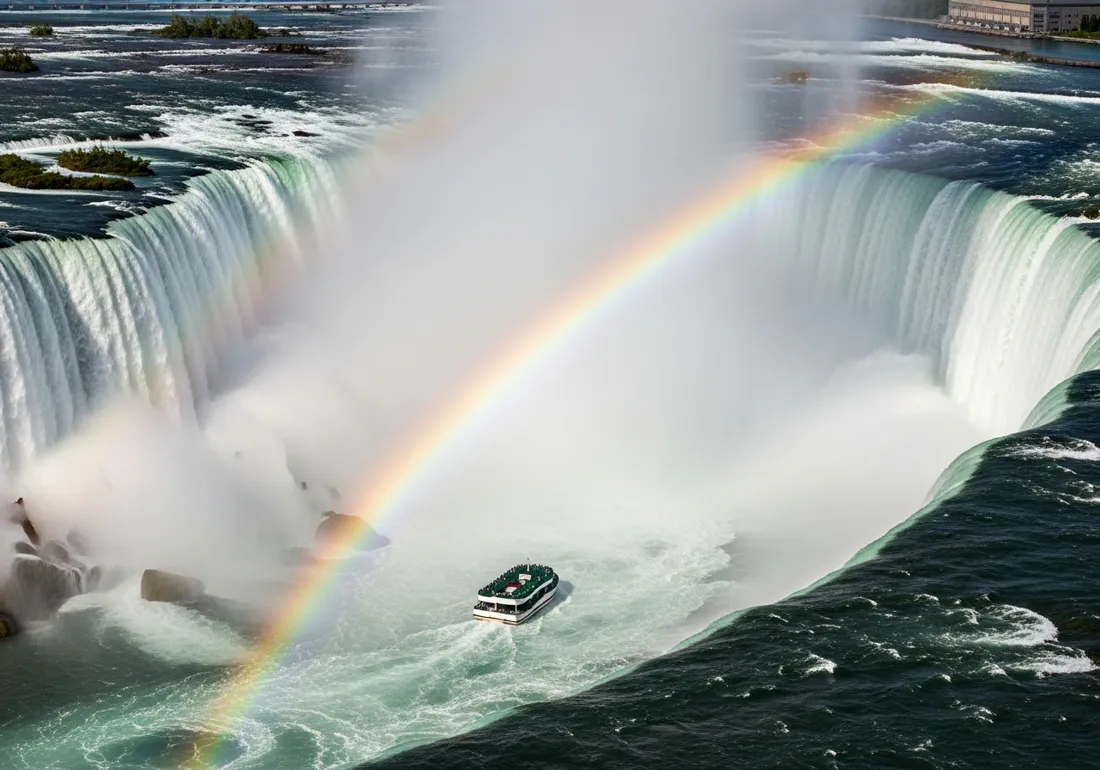
Summer is the most popular time to fly, and for good reason. Days are long, the sky is often deep blue, and the Niagara River is running near full — so the plume of mist rising off Horseshoe Falls is at its most dramatic. Warm afternoons also mean the rainbow that forms in the spray is a near-daily sight.
The catch is demand. July and August are peak season across Niagara Falls, Ontario — Clifton Hill, the parks and the heliport are all busy — so popular flight times fill up days ahead. If you are travelling in summer, reserve early and aim for a morning slot. You get the same fullness of water with a fraction of the crowd. There is no reason to leave a summer booking to the last minute.
Best for: maximum water flow, warm weather, rainbows, families on a summer trip.
Autumn (September–October): the sweet spot
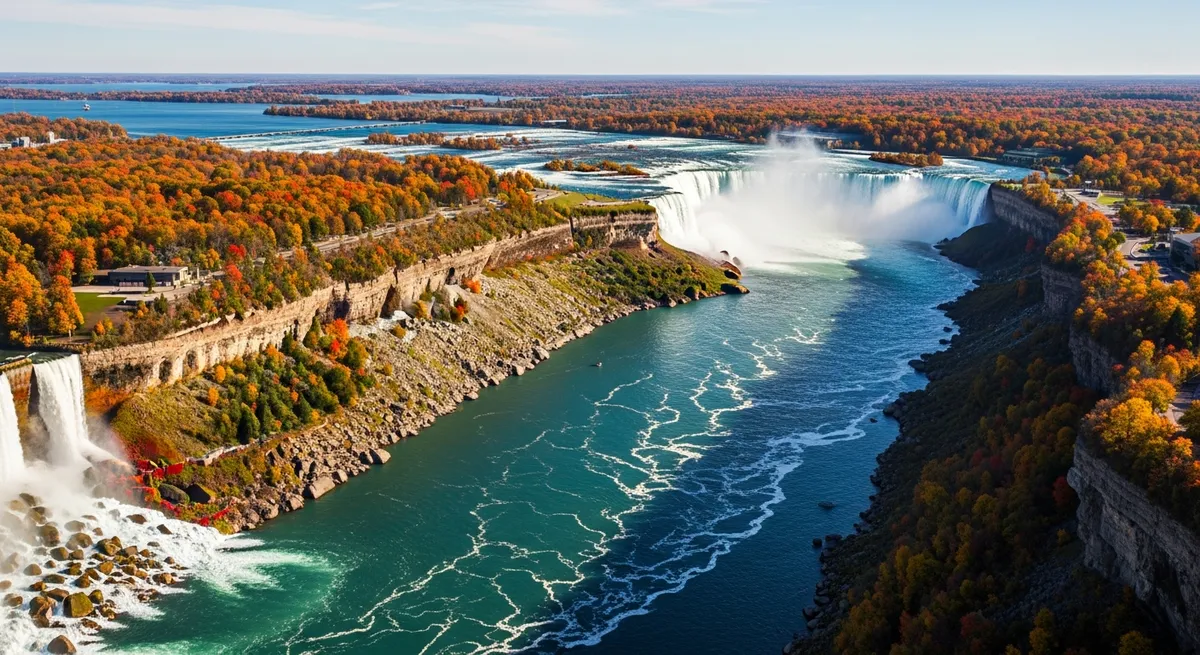
If we had to name one season, this is it. By late September the summer crowds have gone home, but the weather is still reliably good and the air turns noticeably clearer and more stable — which means smoother flights and sharper views all the way to the horizon. Then the foliage turns. Seen from the air, the Niagara Gorge, the Whirlpool and Queen Victoria Park light up in reds, oranges and golds that you simply cannot appreciate from the ground.
Early to mid-October is, for most people, the single best value window of the year: great colour, thin crowds, clear light, and a good chance of clear-day bonuses like the Toronto skyline to the north. It is also one of the calmest times to book — waits are short and rebooking around weather is easy. If you have flexibility, plan your visit for this window.
Best for: photographers, couples, anyone who wants the best view for the least crowd. See exactly what the autumn route looks like on the 12-minute tour page.
Winter (December–February): frozen, dramatic and quiet
Winter flights are the most underrated of all. When the temperature drops, the gorge frames the falls in ice and snow, and the contrast of the dark-green water against white banks is genuinely spectacular from above. The falls never fully freeze, but the ice formations along the edges and the frozen mist coating the trees turn the whole scene into something out of a painting. Crowds are at their thinnest, so you often share the cabin with fewer people — sometimes just your own group.
The trade-off is weather. Winter brings more days when flights are grounded for snow, wind or low cloud, so build a little flexibility into your plans. The upside: our weather policy means a grounded flight is a free reschedule or a full refund, so a cancelled day costs you nothing but the wait. Dress warm, pick a clear cold day, and you will have the falls almost to yourself.
Best for: dramatic scenery, small groups, travellers who want to avoid crowds entirely.
Spring (March–May): the river returns to power
Spring is a season of two halves. Early spring — March into April — is the most weather-dependent stretch of the whole year. Melting snow, shifting winds and unsettled skies mean this is when flights are most often delayed or moved, so it is the one window where flexibility matters most. If you are travelling then, keep your plans loose and treat a clear morning as a gift.
By May, though, spring is one of the loveliest times to fly. The snowmelt pushes the Niagara River back toward its fullest flow, the surrounding parks green up, and the crowds have not yet arrived for summer. You get near-summer water levels with near-autumn quiet. Book a morning slot and spring rewards you handsomely.
Best for: big water without summer crowds (late spring); flexible travellers hunting a quiet clear day (early spring).
What is the best time of day to fly?
Season sets the mood; time of day sets the light and the wait. For most travellers, morning wins.
Morning: shortest waits, clearest air
The first flights of the day are the smart choice. The air is at its calmest and clearest before the day warms up, haze builds and afternoon winds pick up — so morning flights tend to be the smoothest and the sharpest. Check-in queues are shortest first thing, which matters most in summer when the heliport gets busy later. And if the weather is marginal, an early slot gives you the most room to rebook the same day. If you only take one piece of advice from this guide, make it this: book a morning flight.
Golden hour: the most cinematic light
If light is what you are chasing, the last hour or two before the sun drops is hard to beat. In late afternoon the sun sits low and rakes across the gorge, throwing long shadows and lighting the mist so it glows. The water over Horseshoe Falls turns from green to gold, and the whole scene gains a depth that flat midday light flattens out. Golden hour flights are especially worth it in autumn and winter, when the sun is lower in the sky for longer. The one caveat: light fades fast near closing, and hours are shorter in winter, so book ahead and confirm the day's flight times.
Midday: fine, but not the best of either
Midday flights are perfectly good and often the easiest to book on short notice. The trade-off is that overhead sun flattens the landscape and, on warm days, haze is at its worst. If midday is what fits your schedule, take it — the falls are still astonishing from the air. But if you can choose, bookend your day with a morning or golden-hour slot instead.
"One of the best birthday presents I've ever had. What a view of the city and falls from above."
— Jason, United Kingdom
Weather, cancellations and how to plan around them
Helicopter flights are governed by the weather, full stop. Flights run about 365 days a year, but a safe flight needs reasonable visibility and manageable wind — so on a genuinely bad-weather day, flights are grounded. That is a safety decision, and it is the right one.
Here is what that means for your planning:
- Book the earliest slot you can. Morning flights leave the most daylight to rebound if the weather clears later.
- Build in a buffer day. If your trip allows it, avoid making your only free day your flight day — especially in winter and early spring.
- You are protected either way. If weather grounds your flight, you get a free reschedule or a full refund. And free cancellation applies up to 96 hours before you fly, so plans can change without penalty.
- Light rain isn't always a no. Flights are grounded for visibility and wind, not a passing shower. When in doubt, the flight team makes the call on the day.
Have a specific date in mind and want to know how it usually looks? Get in touch and we'll talk you through it — we do this every day and are happy to point you toward the best window for your trip. You'll also find seasonal and weather questions answered on our frequently asked questions page.
A quick month-by-month cheat sheet
- January–February: Frozen, dramatic, very quiet. More weather days — stay flexible.
- March–April: The most changeable window of the year. Book a morning and keep plans loose.
- May: Big water, green parks, light crowds. One of the best all-round months.
- June–August: Peak season. Fullest mist, longest days, busiest ground — book early, fly in the morning.
- September: Crowds fade, weather holds. A quietly excellent time to fly.
- October: Best value of the year — foliage, clear air, thin crowds.
- November: Colour lingers early on; crisp, clear and calm. Underrated.
- December: Early winter drama with holiday-light energy in the town below.
So, when should you book?
If you want the honest short answer: aim for a clear morning in early October and you will get the best all-round flight of the year. Want the fullest, most thunderous falls? Come in summer and book ahead. Want drama and solitude? Fly on a clear cold day in winter. Chasing the most beautiful light? Take a golden-hour slot in autumn. Every one of these is a genuinely great flight — the differences are about matching the day to what you most want to see.
Whichever window you choose, the flight itself is the same 12 minutes over all three falls, with a unbeatable views and live narration for every passenger. For a full breakdown of the aircraft, the route and what's included, read everything about the 12-minute helicopter tour.
Ready to fly?
Pick your season, pick a morning, and reserve your seats — with free cancellation up to 96 hours before you fly. The clearest days go fast in every season, so the sooner you lock in a slot, the more choice you'll have over your flight time.